
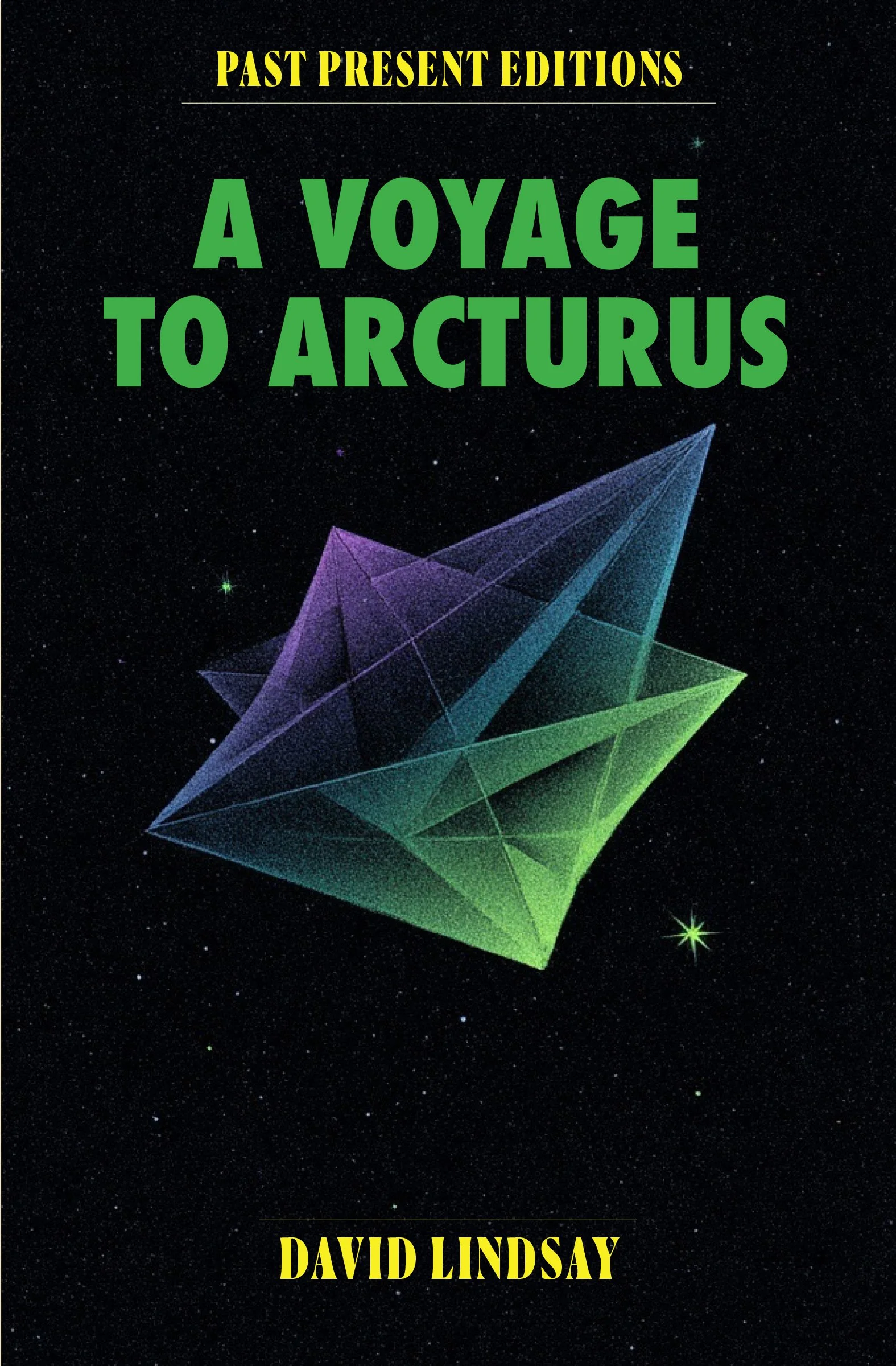
The first edition of A Voyage to Arcturus, published by Methuen in London in 1920, sold fewer than six hundred copies. One of the most visionary novels in the English language arrived and was met with almost perfect silence.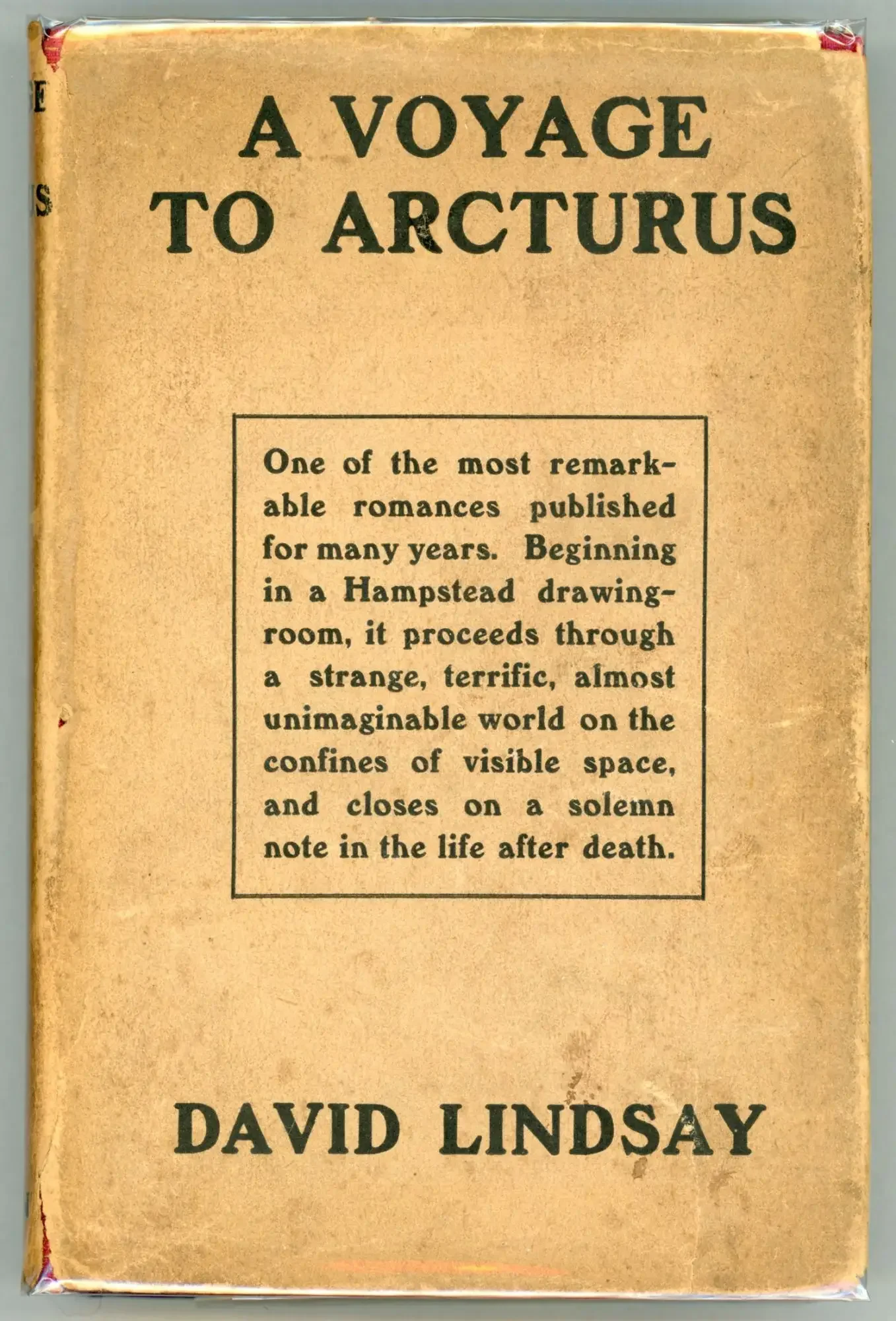
A Voyage to Arcturus
by David Lindsay
The Book That Was Stranger Than Fiction
David Lindsay published A Voyage to Arcturus in 1920 when he was forty years old. He had spent years working as a clerk in a London insurance office, he had served in the First World War, and had written the novel in the particular isolation of a man who had looked at the world and found it insufficient to his needs. He was not writing entertainment. He was not writing science fiction, though it veers that direction for the first few chapters. He was writing a philosophical assault on the nature of reality itself, disguised as a planetary romance because that happened to be the only form that could capture what he needed to say.
Unsurprisingly, nobody bought it.
The first edition sold fewer than six hundred copies. The publisher lost money. Lindsay, who had quit his insurance job to write full time, was financially devastated and never recovered. He wrote five more novels over the remaining twenty-five years of his life, each one stranger and more uncompromising than the last, and none of them found an audience either. He died in 1945 from a dental abscess—an infection so basic and treatable, even at that time, that it speaks directly to how destitute he was at the end—largely unknown, largely unread, in a boarding house in Brighton.
What he left behind is one of the most peculiar objects in the English literary canon.
A Voyage to Arcturus follows a man named Maskull who travels to a planet orbiting the star Arcturus, where physical laws are different, where new sense organs spontaneously grow on his body to perceive dimensions of reality that don't exist on Earth, and where every person he meets represents a different philosophical position about the nature of existence, suffering, and what lies beyond both. Each chapter is essentially a new world with new rules. Each character Maskull encounters—and is changed by, and often watches die—is an argument about how to live, rendered in flesh and landscape rather than prose.
When describing this book, it’s easy to think it shouldn't work. Somehow Lindsay pulls it off.
C.S. Lewis read it and called it a work of genius and said it had permanently influenced his imagination. You can feel Arcturus in the bones of the Narnia books and even more directly in his Space Trilogy. Northrop Frye, one of the twentieth century's most important literary critics, wrote about it with reverence. J.R.R. Tolkien almost certainly read it. The novel exists in a strange category of its own — too visionary for genre readers, too strange for literary readers, too metaphysical for casual readers, and absolutely essential to anyone who has ever felt that fiction could do something more than tell a story.
While writing the book, Lindsay developed an entire private cosmology to underpin the novel, a mythology of competing cosmic forces he called Crystalman and Muspel, representing essentially the principle of beautiful illusion versus the principle of unbearable truth. He believed, apparently with complete sincerity, that the world as we experience it is a kind of gorgeous trap, and that genuine reality—whatever that is—lies somewhere beyond pleasure, beauty, and comfort entirely. The novel is his attempt to point in that direction. Whether he knew where he was pointing remains an open question.
The colors on Tormance, the planet Maskull visits, are not the colors of Earth. Lindsay invented new colors—jale and ulfire—that he described as existing beyond the visible spectrum, colors the human eye cannot perceive and the human mind cannot quite imagine. He described them anyway, in language that somehow works, that makes you feel the edge of something you can't see.