
The first printed edition of Meditations by Marcus Aurelius was published in 1558 or 1559 by Wilhelm Xylander, marking the first formal publication of the text, which had been written in Koine Greek by Marcus Aurelius. The edition was published at the instigation of Conrad Gesner and printed by his cousin Andreas Gesner in Zurich.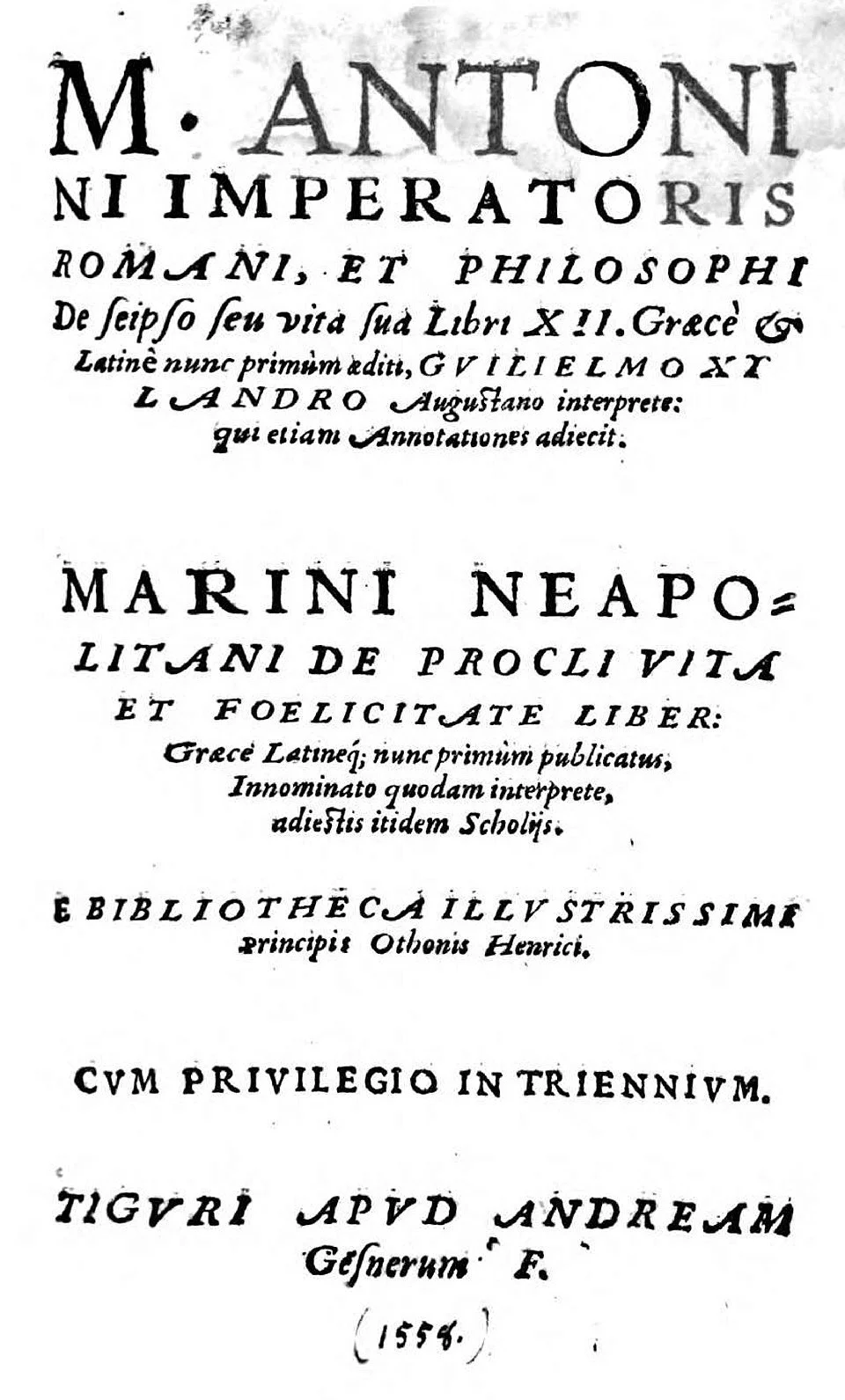
Meditations
by Marcus Aurelius
The Book That Was Never Meant to Be
Marcus Aurelius ruled the Roman Empire from 161 AD to 180 AD. During that time, he was the most powerful man on earth. He ruled an empire stretching from Scotland to Syria, commanded armies, decided the fates of millions. And somewhere in the margins of that life—on campaign in Germania, in the pre-dawn quiet of a military tent—he wrote notes to himself that he never intended anyone to ever read.
He called them simply Ta Eis Heauton. Roughly: To Himself.
No title. No intended audience. No publication plan. Just a man—arguably the most consequential man of his era—holding himself ruthlessly to account on the page because he apparently trusted no one else to do it.
The work survived almost entirely by accident. After Aurelius died in 180 AD, the manuscripts passed through unknown hands for centuries. The first concrete evidence of their existence doesn't appear until the tenth century, when a Byzantine scholar named Arethas of Caesarea references them in a letter—expressing relief that a copy still existed, suggesting even then they were understood to be fragile and rare. How they survived the fall of Rome, the chaos of the early medieval period, and the general catastrophe that consumed most of the ancient world's writing remains genuinely unknown. They simply appeared, intact, when they easily might not have.
The first printed edition wasn't published until 1558—nearly fourteen centuries after they were written—by a Swiss scholar named Wilhelm Xylander, working from a manuscript whose current location remains disputed by historians to this day.
What Xylander published, and what you will read, is the private journal of a man who would have been mortified to know you were reading it. That discomfort—that sense of having been granted access to something not meant for you—is part of what makes Meditations unlike anything else in the philosophical canon. Aurelius wasn't performing wisdom. He was practicing it, privately, imperfectly, on the page, the way the rest of us do in our most honest moments.
Interestingly, he repeatedly writes the same lessons to himself across different entries—reminders about patience, ego, mortality—because he kept forgetting them and needed to start over. The most powerful man in the world was writing himself the same notes again and again, trying to become someone he hadn't managed to be yet.
Nearly two thousand years later, so are we.