
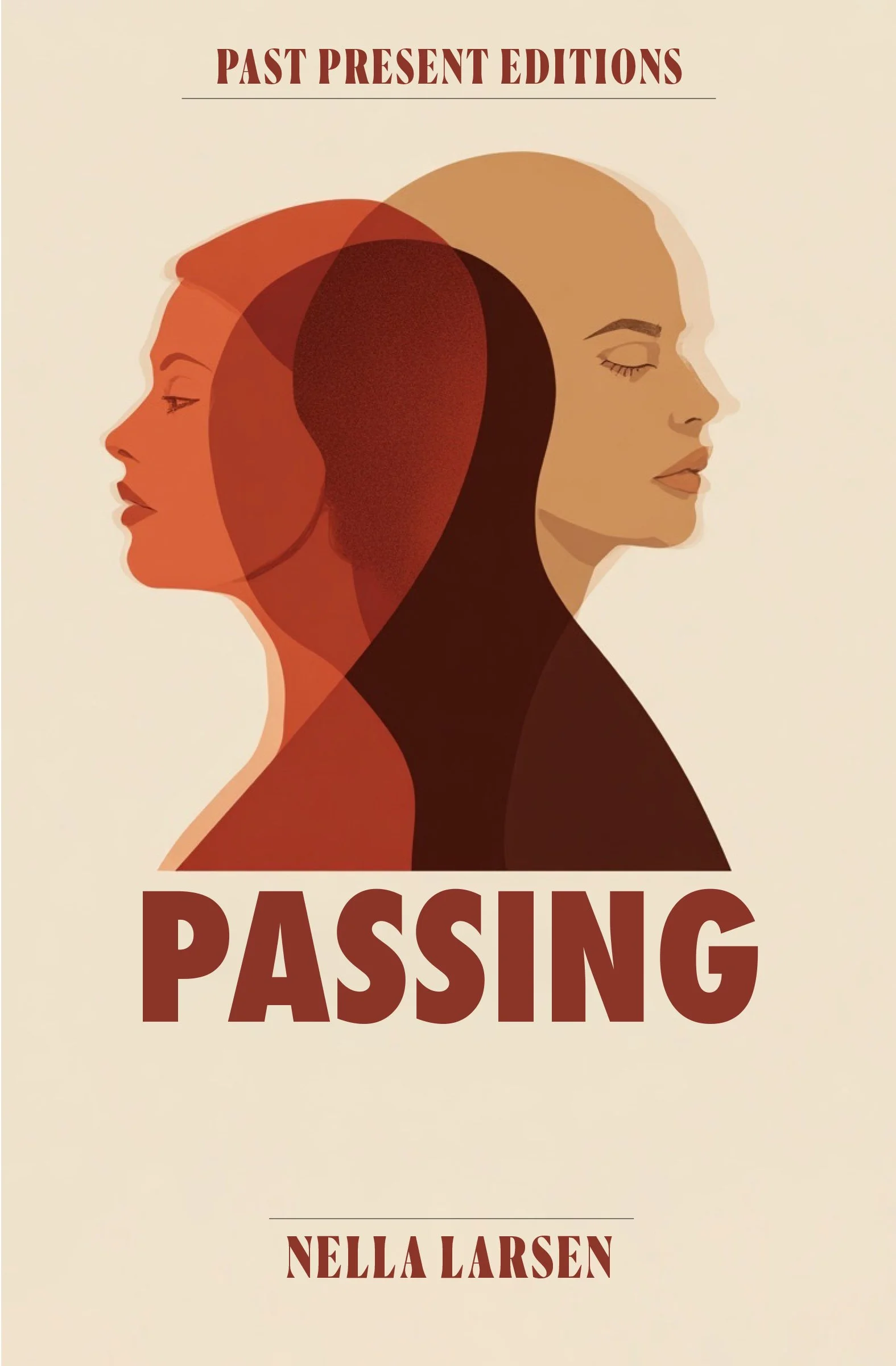
The first edition of Passing was published by Alfred A. Knopf in 1929—the most prestigious literary imprint in America—in a plain, modest binding that gave no indication it contained one of the most quietly radical novels ever written.
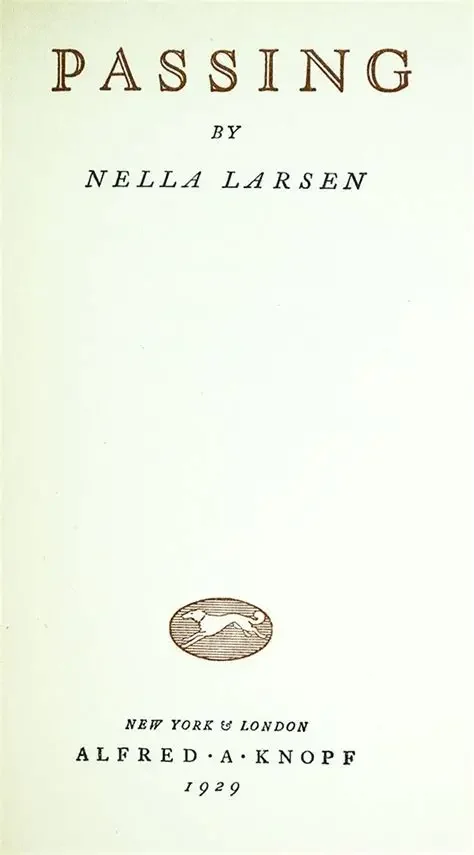
Passing
by Nella Larsen
The Novel That Disappeared. Twice.
Nella Larsen published Passing in 1929 to genuine critical acclaim. The reviews were strong, the literary community took notice, and Larsen became the first African American woman to receive a Guggenheim Fellowship in creative writing, a remarkable achievement that should have launched a long and celebrated career.
Instead everything collapsed.
In 1930, just one year after Passing appeared, Larsen was accused of plagiarism for a short story she'd published in a prominent magazine. The accusation was almost certainly false—the evidence was thin, the charge was likely motivated by racism, and she was eventually cleared—but the damage was permanent. The literary world that had briefly embraced her quietly withdrew. She published nothing after 1930 and spent the remaining three decades of her life working as a nurse in Manhattan, almost entirely absent from the literary conversation. She died in 1964 in her apartment, where her body wasn't discovered for several days.
Passing went with her into obscurity.
What makes the novel's disappearance particularly painful is how smart, observent, and astute it is, which readers and scholars didn't fully reckon with until decades after her death. On its surface, Passing is about Irene Redfield, a light-skinned Black woman in 1920s Harlem, and her complicated relationship with Clare Kendry, a childhood friend who has crossed the color line entirely and is living as a white woman, married to a virulently racist white man who has no idea about his wife’s heritage. It is a novel about race and identity and the performance of selfhood under impossible social pressure … at a time when it was nearly impossible to discuss those things.
But it is also, read carefully, a novel about desire. The tension between Irene and Clare—the obsession, the jealousy, the strange gravity that pulls them together despite every reason to stay apart—carries an erotic charge that Larsen never makes explicit but never quite hides. Scholars began arguing in the 1980s that Passing is one of the earliest and most sophisticated explorations of queer desire in American literature, written in a coded language that the 1929 literary establishment either didn't notice or chose not to acknowledge.
Larsen almost certainly noticed.
Larsen published under her own name but lived a life of careful self-concealment not unlike Clare Kendry's. She was of mixed Danish and West Indian heritage, navigated multiple worlds simultaneously, and was intensely private about her personal life in ways that biographers have found genuinely difficult to penetrate. How much of Passing was observation and how much was autobiography remains one of the more quietly urgent questions in American literary scholarship.
The 2021 film adaptation—shot in black and white by Rebecca Hall, herself of mixed racial heritage—introduced the novel to an entirely new generation of readers and sparked a conversation about race, identity, and passing that felt as urgent as anything written today.