
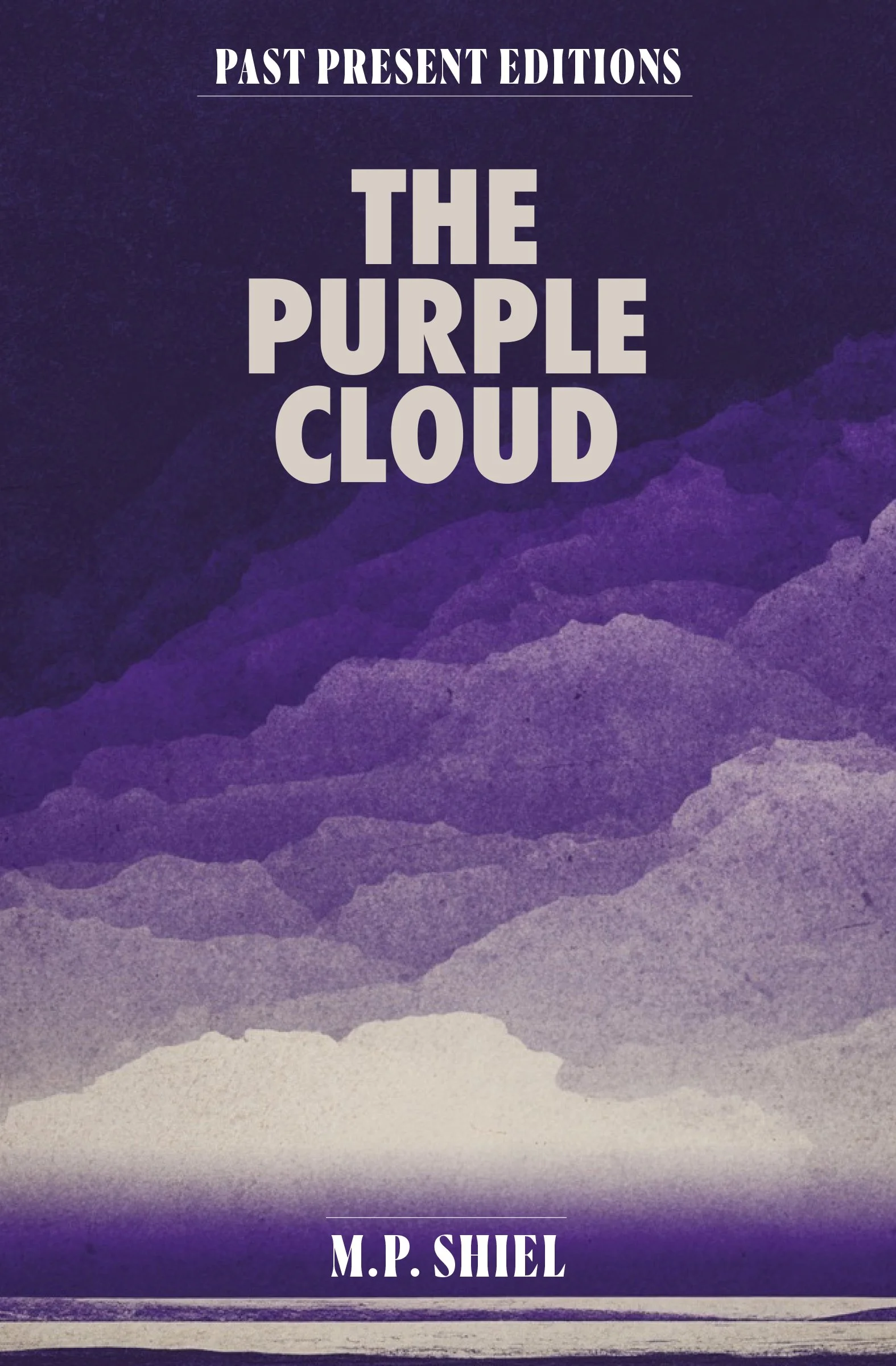
Published by Chatto and Windus in London in 1901, the first edition of The Purple Cloud arrived to modest reviews and modest sales. It was a novel about the end of everything that the world received with considerable indifference.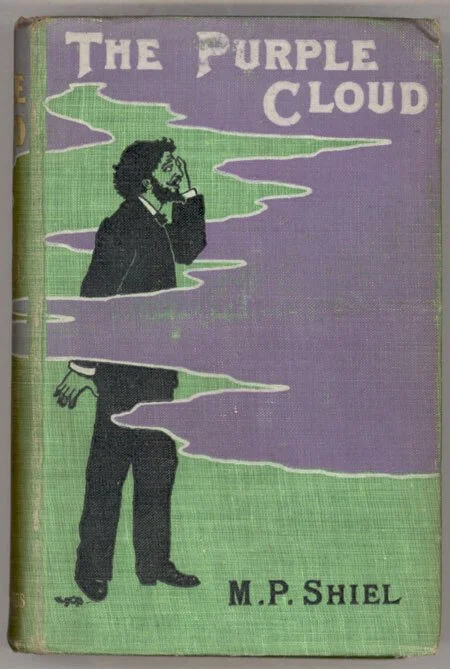
The Purple Cloud
by M.P. Shiel
A Singular and Troubling Voice
M.P Shiel was born on the Caribbean island of Montserrat to a Methodist preacher father who believed, with complete conviction, that his son was destined to be the King of a new world order—a belief he apparently communicated to the boy with enough force and frequency that both of them began to believe it. Whether this paternal prophecy liberated him or damaged him or simply made him the particular kind of writer he became is a question his biography raises without quite answering.
What it produced was one of the most singular and troubling novels in the English language.
M.P. Shiel published The Purple Cloud in 1901 when he was thirty-two years old. The story follows Adam Jeffson, a man who reaches the North Pole as part of an expedition and returns to find every human being on Earth dead. A purple cloud of volcanic cyanide gas, released from beneath the ocean floor, has moved silently across the planet while he was gone and taken everything with it. Every person. Every animal. Every civilization. The world is intact. Buildings stand, libraries are full, paintings hang unmoved on museum walls, but the world is empty. Jeffson is alone in a way no human being has ever been alone, in a silence so complete it has weight and texture and eventually, inevitably, a kind of terrible freedom.
What Shiel does with that premise is where the novel becomes something genuinely difficult to categorize.
Jeffson does not grieve in any recognizable way. He does not search for survivors with desperate hope. He burns things. He travels the world setting fire to cities including London, Paris, Constantinople, New York, with a methodical, almost aesthetic pleasure, as if he is curating the end of civilization rather than mourning it. He develops a megalomaniacal relationship with his own survival that is part madness, part dark comedy, and part something the novel never quite names. He becomes, in the absence of all human judgment, exactly what he wants to be, which turns out to be something the presence of other people had always prevented.
Shiel was writing about solitude as a mirror. What Jeffson sees in that mirror is the novel's central and most uncomfortable argument.
Brian Aldiss, one of the twentieth century's most important science fiction critics and historians, called The Purple Cloud the finest example of the post-apocalyptic novel ever written. That assessment is not universally shared but it is not easily dismissed. The novel predates the genre it helped establish by decades, and it does things within that genre—psychologically, philosophically, structurally—that most of its successors never attempt. The post-apocalyptic tradition tends toward community, toward survival, toward the rebuilding of human connection in the ruins. Shiel was interested in none of that. He was interested in what a man becomes when there is no one left to perform humanity for.
Shiel's life was as strange and dark as anything he wrote. In 1902, the year after The Purple Cloud was published, he was convicted of sexually abusing his twelve-year-old stepdaughter and sentenced to eight months in prison. The conviction is documented, the crime is real, and it sits alongside his literary achievement in a way that cannot be resolved or explained away. His biography is one of the more genuinely uncomfortable in literary history. A writer of remarkable visionary power whose private life contained something irredeemable. We at Past Present Editions acknowledges this directly because serious readers deserve the full picture, and because the novel, whatever its author did, remains a work of genuine and troubling power that the literary tradition has not yet fully reckoned with.
The purple cloud itself—the mechanism of extinction—was inspired by real volcanic events Shiel had read about, particularly the eruption of Krakatoa in 1883, which killed tens of thousands and sent atmospheric effects around the entire globe for years. Shiel took that real catastrophe, scaled it quietly to its logical extreme, and asked what would happen if the gas kept coming and never stopped. The answer he arrived at was not the disaster. It was the survivor.