
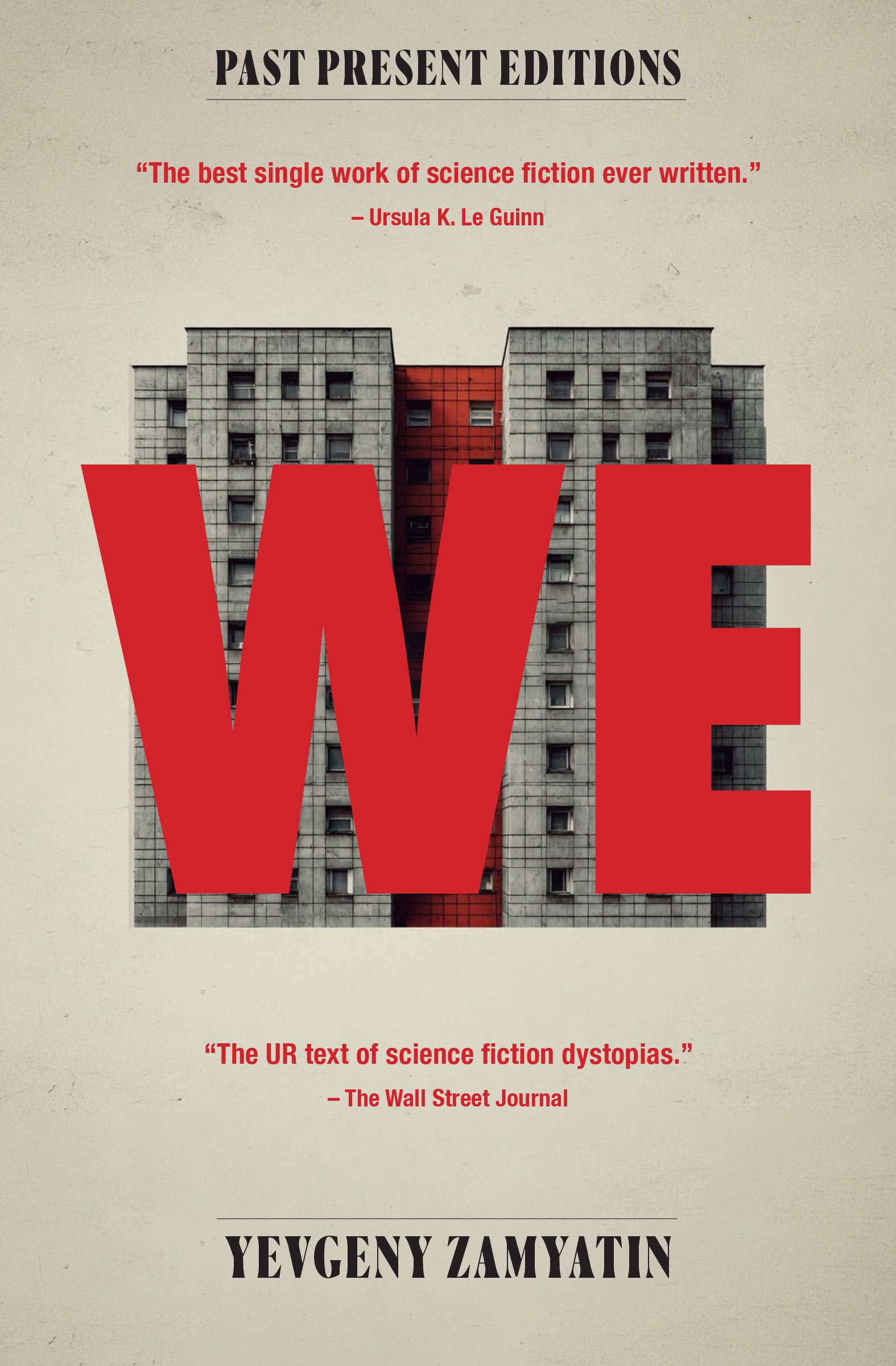
The first edition of We was never printed in Zamyatin's home country. Instead, it made its debut in English translation in New York in 1924. A Russian novel that Russia itself refused to acknowledge.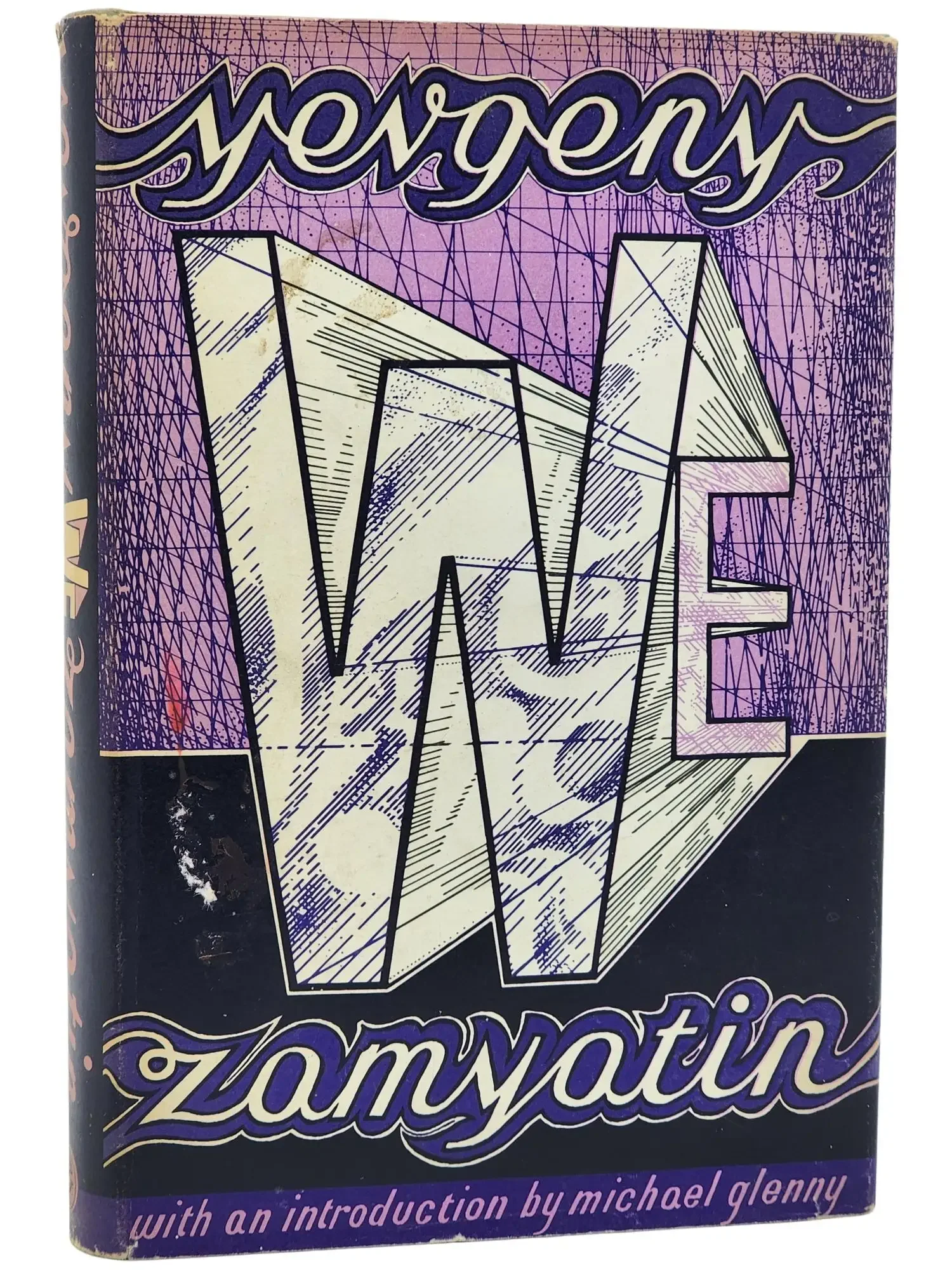
We
by Yevgeny Zamyatin
Future Dystopia Through an Engineer’s Eyes
Yevgeny Zamyatin wrote We in 1920. He was a Russian naval engineer by training, a Bolshevik by early conviction, and a man who had already been arrested twice by the Tsar's government for his political beliefs, which makes what happened next one of the more pointed ironies in literary history. The revolution he had believed in, and suffered for, read his novel, recognized itself in it, and banned him.
We was the first work of literature ever banned by the Soviet censorship bureau, the Goskomizdat, in 1921. Not because it was counterrevolutionary in any simple sense—Zamyatin was no monarchist, no apologist for the old order. It was banned because it was accurate. He had looked at the logic of the revolution, followed it forward with an engineer's precision, and described exactly where it was going. The Soviet state didn't appreciate the preview.
Since the novel couldn't be published in Russia, it was smuggled out in manuscript form and published first in English translation in New York in 1924, then in Czech, then in French. Zamyatin's own countrymen wouldn't read it in their own language for decades. The Soviet edition didn't appear until 1988, during Glasnost, sixty-seven years after it was written and fifty years after Zamyatin died in poverty in Paris, having been effectively hounded out of his homeland by a literary establishment that found his imagination inconvenient.
What We imagined is worth sitting with. Written before Stalin, before the gulags, before the full machinery of Soviet totalitarianism had assembled itself, the novel describes a glass city called the One State where citizens have numbers instead of names, where imagination has been surgically removed, where the secret police are called the Guardians, and where a man begins to suspect he has developed a soul. Orwell read it in 1945 and wrote 1984 two years later. Huxley almost certainly read it before Brave New World. Both acknowledged the debt in varying degrees. Zamyatin got there first by twenty years and did it with less safety net than either of them, writing from firmly inside the thing he was describing.
Zamyatin wrote We while simultaneously working as a ship designer and supervising the construction of Soviet icebreakers. He was building the infrastructure of the state he was dismantling on the page at night. He apparently saw no contradiction in this, or perhaps he saw nothing but.
In 1931, facing escalating persecution and the effective destruction of his ability to publish or work in Russia, Zamyatin did something almost no Soviet writer of his era managed: he wrote directly to Stalin requesting permission to emigrate. Stalin, in one of history's stranger moments of magnanimity, said yes. Zamyatin left for Paris, where he lived until his death in 1937, never returning, never fully recognized, never quite forgotten.
We outlasted the state that banned it by several decades and is currently one of the best regarded science fiction novels of all time.