
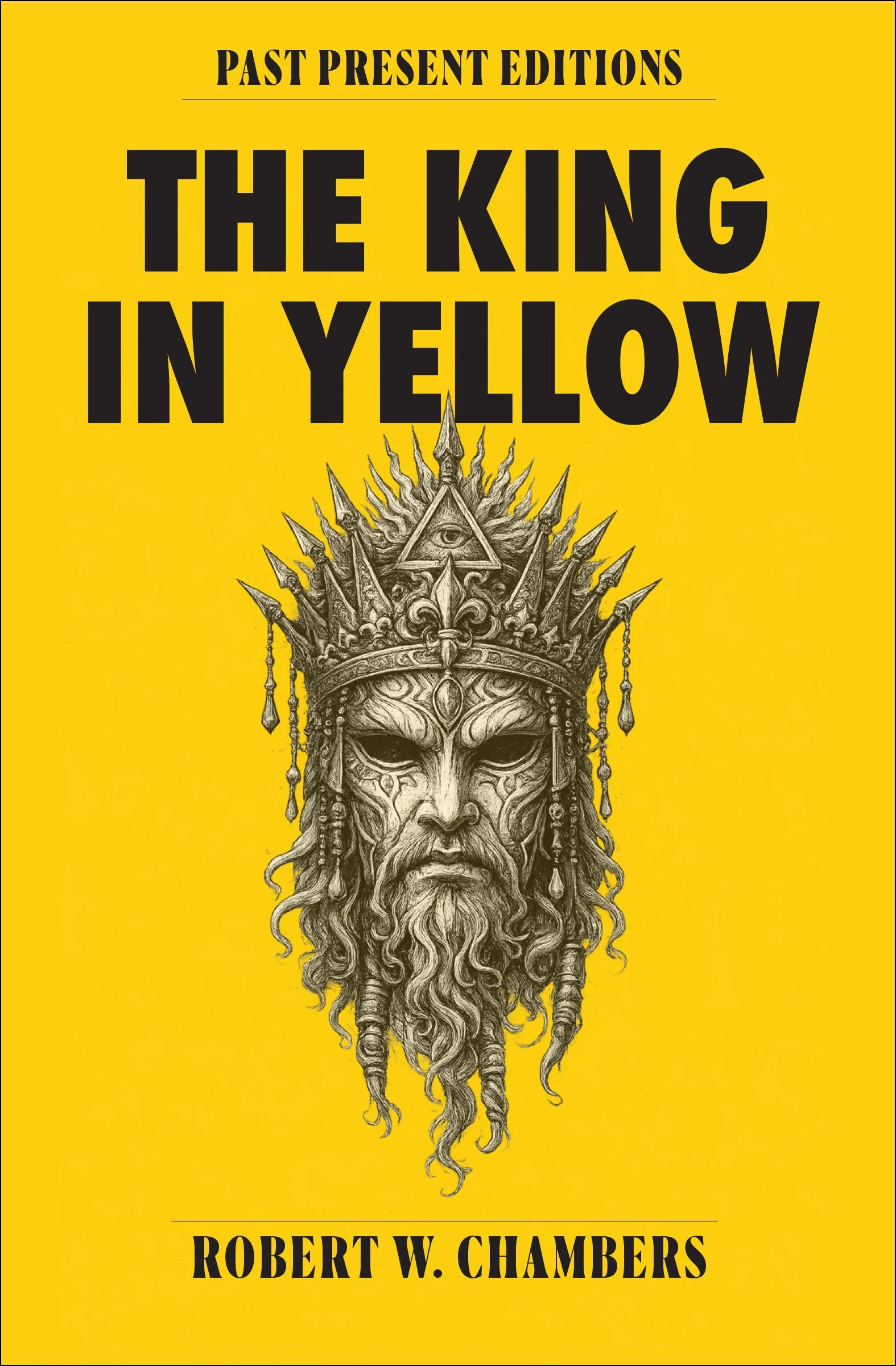
Published by F. Tennyson Neely in New York in 1895, the first edition of The King in Yellow arrived with almost no fanfare—a slim, quietly strange volume that its own author quickly forgot.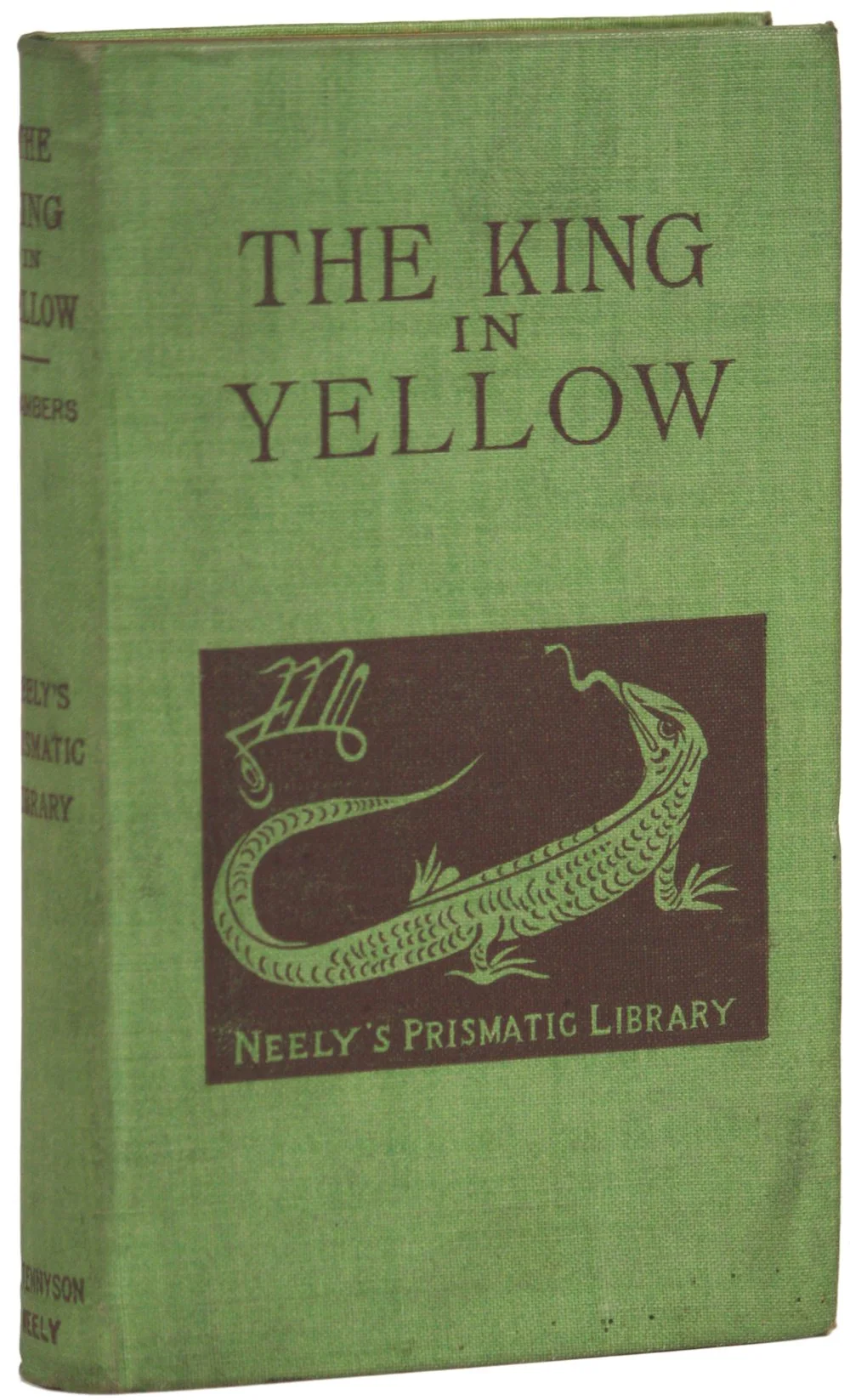
The King in Yellow
by Robert W. Chambers
The Book That Invented a Color
Robert W. Chambers published The King in Yellow in 1895 when he was twenty-nine years old. After studying art in Paris, he was, by most accounts, more interested in becoming an illustrator than a serious writer. He wrote the book quickly, published it without particular fanfare, and then spent the rest of his long and prolific career writing popular romance novels that made him considerably more money.
Not quite a novel and not quite a short story collection, the book is ten loosely connected pieces. The first four—the ones that matter—orbit a fictional play called The King in Yellow whose second act, if read, drives its reader inexorably toward madness. In a unique plot device for the times, Chambers never shows you the play. He shows you only what happens to the people who read it. The dread is entirely in the negative space, in what is withheld, in the specific horror of a thing that cannot be unseen or unread.
What Chambers invented, almost accidentally, in those four stories, was an entirely new architecture of horror. Not the monster in the room. Not the ghost in the house. Something older and more cosmically indifferent. A color called Yellow that means wrongness. A place called Carcosa that exists just past the edge of what the mind can safely hold. A symbol called the Yellow Sign that means something different to everyone who sees it and nothing good to any of them.
H.P. Lovecraft read it and built an entire mythology from its foundations. And if Carcosa sounds familiar, the first season of HBO’s hit show True Detective re-introduced it to an entirely new generation in 2014, and sent sales of every existing edition through the roof. The weird fiction community has never stopped embracing it. Nearly one hundred and thirty years after publication, Chambers' four strange stories remain the headwaters of an entire river of American horror literature, written by a man who preferred to write drawing room romances and reportedly never thought much these stories again.
Chambers borrowed the name Carcosa from Ambrose Bierce, who used it in a short story in 1891. He borrowed the name Hastur—the unspeakable entity lurking at the edges of the mythology—from Bierce as well. Bierce himself never explained where he got them. The origin of those names, those places, those words that feel like they mean something in a language no one speaks, remains genuinely unknown. Chambers took them, built a cathedral around them, and walked away.
As for the actual color yellow, its specific cultural weight in the 1890s is worth understanding. The decade was called the Yellow Nineties in literary circles. Oscar Wilde's movement published a journal called The Yellow Book. Yellow meant decadence, transgression, moral ambiguity, the dangerously aesthetic. Chambers knew exactly what color he was reaching for.